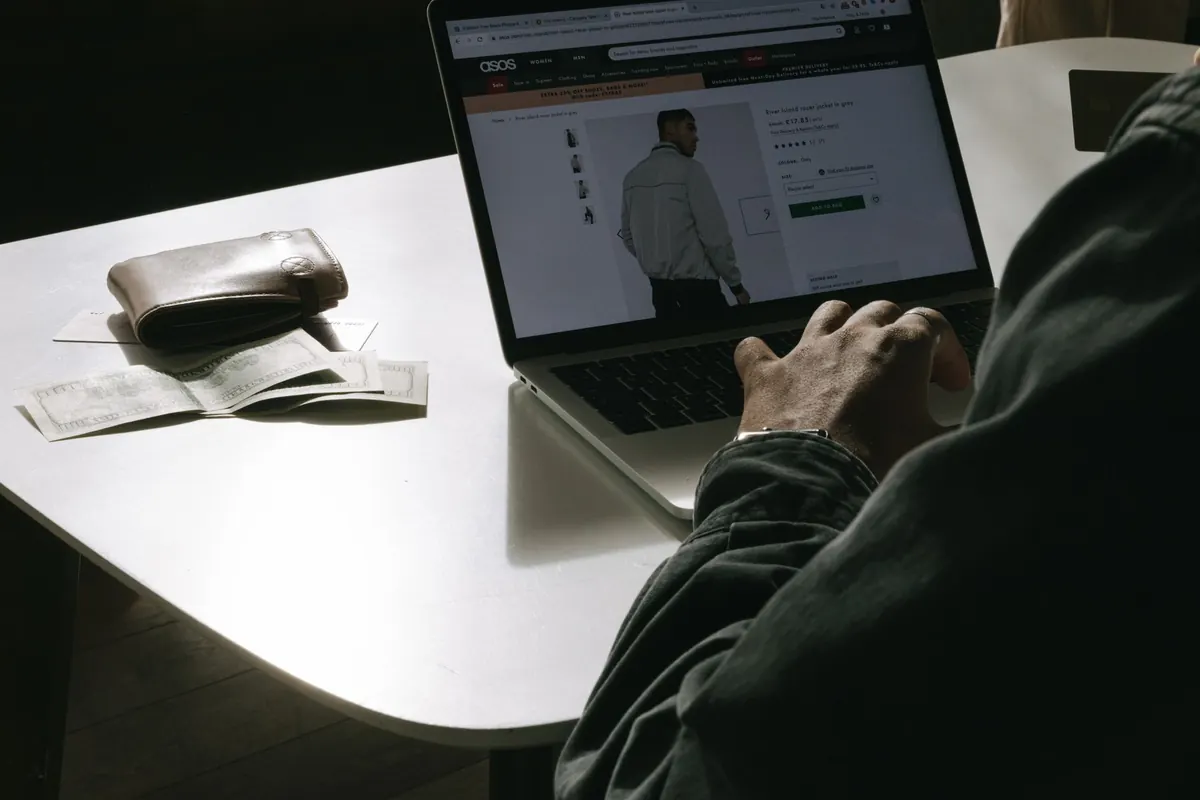
Black Friday no longer lasts a day. It stretches from early November through Cyber Monday and beyond, which is good news for your budget and excellent news for anyone who makes a living from other people's card numbers. Every year the pattern repeats: inboxes fill with delivery notices, social feeds fill with adverts for brands you almost recognise, and a small number of shoppers spend December disputing charges instead of enjoying what they bought.
None of that is a reason to skip the sales. It is a reason to slow down for thirty seconds at the two moments that matter: when you decide where to shop, and when you decide to pay.
Why the holiday rush suits scammers so well
Three things happen at once in late November. Transaction volumes explode, so fraud teams and banks are stretched. Legitimate retailers flood you with emails, so one more "your order is on hold" message does not stand out. And shoppers are pushed toward unfamiliar sellers by deep discounts and short timers.
Add travel, family visits and a pile of packages you are half expecting, and you get a window where a fake message blends into a real one. Scammers do not need to be clever. They need you to be busy and mildly stressed, which is exactly what a sale weekend produces.
Fake storefronts: the deal that is a little too good
The most common holiday scam is not complicated. Someone builds a clean-looking shop, fills it with product photos lifted from a real brand, prices everything 60 percent below retail, and buys social media ads. Orders either never ship, or a cheap counterfeit arrives weeks later. By then the site is gone and the card details you entered are for sale.
Some tells are easy to check in under a minute.
- The domain is new or slightly wrong. Look at the address bar character by character. Extra hyphens, a switched letter, or a ".shop" or ".top" ending on a brand that normally uses ".com" are worth pausing over. A domain registration lookup usually shows how recently the site appeared.
- Every price is discounted, everywhere. Real retailers discount specific lines and run out of stock. A store where literally everything is 70 percent off is selling a feeling, not inventory.
- No real contact details. Check the footer for a physical address, a phone number and a returns policy that describes an actual process. Vague text about "customer satisfaction" is not a policy.
- Payment options are limited to the ones you cannot reverse. Bank transfer, gift cards, crypto or a "friend and family" style transfer are the classic endgame. A shop that refuses ordinary card payments has told you everything.
- The countdown timer resets. Reload the page. If the same "offer ends in 09:59" appears, the urgency is decoration.
Reverse image search a couple of product photos. If the same picture appears on five unrelated shops, you are looking at a template, not a business.
Phishing dressed as a delivery update
Delivery-themed messages are the seasonal favourite because almost everyone is waiting for something. A typical text says a parcel is held and needs a small redelivery fee. A typical email is an invoice for an order you do not remember placing, with a link to "cancel" it. Both lead to a page that harvests your card details or your email password.
Three habits neutralise most of them.
- Never use the link. Open the retailer's or courier's site directly, by typing the address or using a bookmark, and check your order status there. If the message was real, the information will be waiting for you.
- Read the sender and the reply-to address, not the display name. Display names are free to fake. The actual domain often is not the one you expect.
- Treat attachments as hostile until proven otherwise. HTML files posing as invoices and password-protected archives are common lures. You do not need to open a file to learn that you supposedly owe money.
One more: a genuine company will not ask for your card number, your one-time banking code or your password to release a parcel, refund a payment or confirm a delivery. That request alone is the scam, no matter how polished the page looks.
Card skimming, on screen and at the pump
Online skimming works differently from the physical kind. Malicious code is injected into a checkout page, sometimes through a compromised third-party script, and it quietly copies what you type into the payment form. The site itself is legitimate, which is why the page looks and behaves perfectly normally. You cannot spot this by checking for the padlock icon; that only tells you the connection is encrypted, not who is on the other end.
What helps is limiting the value of what gets captured. Use a virtual or single-use card number if your bank offers them, and prefer a payment wallet or a card rather than a direct bank transfer. Where a retailer supports it, paying through a service that keeps your card number out of the merchant's system adds a layer between you and the breach.
Offline, the risk shifts to petrol stations, ATMs and unattended payment terminals on your travels. Loose card slots, mismatched panels, extra plastic around the reader and anything that wobbles are worth avoiding. Tap-to-pay where you can, cover the keypad when you type a PIN, and use an ATM inside a bank branch rather than a standalone machine on a roadside.
A short routine before you hit pay
- Check the domain in the address bar and confirm it matches the brand you think you are buying from.
- Look up the site's registration date and scan one or two independent reviews outside its own pages.
- Confirm the payment methods on offer include something reversible.
- Re-read the total, including shipping and currency, before you confirm.
- Pay with a credit card or a virtual card number if you have the option, and keep the confirmation email.
If something already went through
Speed matters more than embarrassment. Call the number on the back of your card, tell the bank the charge was not authorised, and ask them to block the card and start a dispute. Change the password on any account where you used the same credentials, and turn on two-factor authentication if it was off. Then report it: your national consumer protection body, your country's cybercrime reporting service, or the platform that carried the advert. Reports help the next shopper.
If the amounts involved are significant or your accounts were drained, treat it as a financial matter and speak to your bank's fraud team directly, and to a qualified adviser if you need help working out what you are owed. Nobody at a sale checkout can do that for you afterwards.
Shop deliberately, not urgently
The best defence is boredom. Decide what you actually want before the sales start, write it down, and buy it from a seller you have heard of. When a deal appears from nowhere with a clock attached, that clock is the product being sold.
Thirty extra seconds at checkout costs you nothing. A fraudulent charge, a cancelled card and a week of phone calls costs a lot more, and always in the week you least want them.
Photo: Ivan S / Pexels